
Friends of Grasslands
supporting native grassy ecosystems
PO Box 440
Jamison Centre
Macquarie ACT 2614
email: advocacy@fog.org.au
web: www.fog.org.au
Queanbeyan-Palerang Regional Council
Re. Construction of a registered club premises (DA.2023.0635)
Friends of Grasslands (FOG) is a community group dedicated to the conservation of grassy ecosystems in south-eastern Australia - natural temperate grasslands and grassy woodlands. FOG advocates, educates and advises on matters to do with the conservation of these ecosystems, and carries out surveys and on-ground work. FOG is based in Canberra and its members include professional scientists, landowners, land managers and interested members of the public.
In Sept 2021, development was approved under the Environment Protection and Biodiversity Conservation Act 1999 (EPBC Act) on land identified as ‘North Poplars’ in Jerrabomberra NSW.[1] Part of North Poplars, i.e., the portion of Lot 6 on Deposited Plan 1243031 shown in Figure 1 (Lot 6), is the portion of North Poplars on which a registered club is proposed to be constructed and operated.
Last week, as a member of the Canberra Grassland Earless Dragon Recovery Team, FOG was alerted to the presence of an individual Canberra Grassland Earless Dragon, Tympanocryptis lineata (Canberra Dragon), within 80 metres (m) of Lot 1 on DP1243031. Other individuals have been sighted within 100 m. For their protection, the precise location of these individuals is not divulged in this public submission. The Recovery Team was also briefed on just how far individuals are known to move; distances of 700 metres are now known to be within range. The NSW Threatened Species Scientific Committee made a final determination to list Canberra Dragon as a ‘critically endangered’ species on 1 December 2023.
Also last week, to help developers identify and avoid key areas for threatened species, Environment Information Australia released data revealing the most important habitats in Australia.[2] North Poplars and Lot 6 within it is one such place (Figures 2-3). The raster data is coarse at 1 km and 1 km squares; however, what Figures 2-3 confirm is that the Jerrabomberra Valley could not be more important ... and while it is not explicit in the data we all know Figure 3 is depicting habitat of the utmost importance for the continued existence of Canberra Dragon.
Development of Lot 6 will reduce the area of occupancy of Canberra Dragon at the south-east edge of its distribution. FOG submits the significance of this impact will be substantially greater than has been identified in the information submitted for assessment. On this basis alone, DA.2023.0635 should be refused.
Yours sincerely
SIGNED
Professor Jamie Pittock
President, Friends of Grasslands
3 August 2026
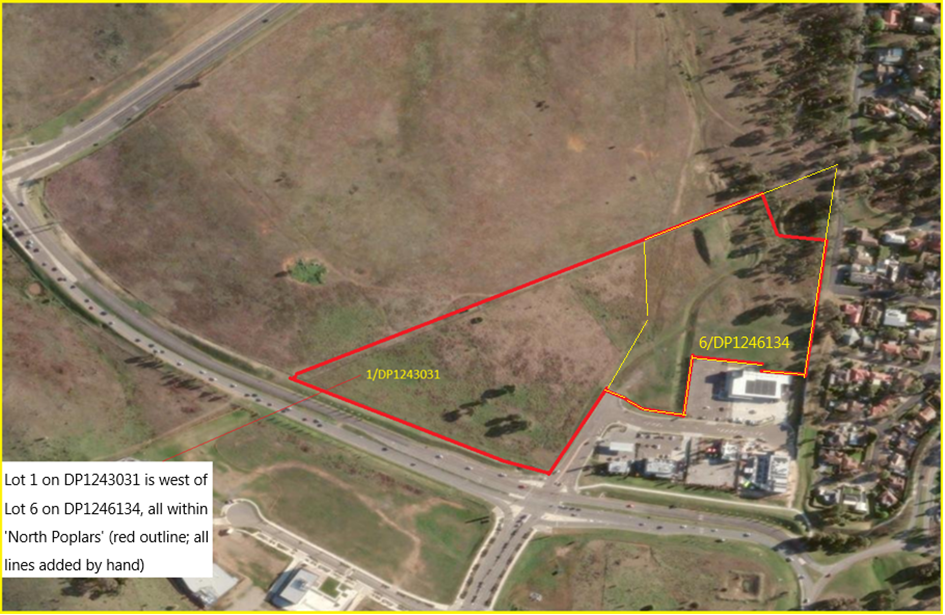
Figure 1: Identifying the location (approximate) of Lot 6 on DP1246134 (yellow lines) within ‘North Poplars’ (red outline)
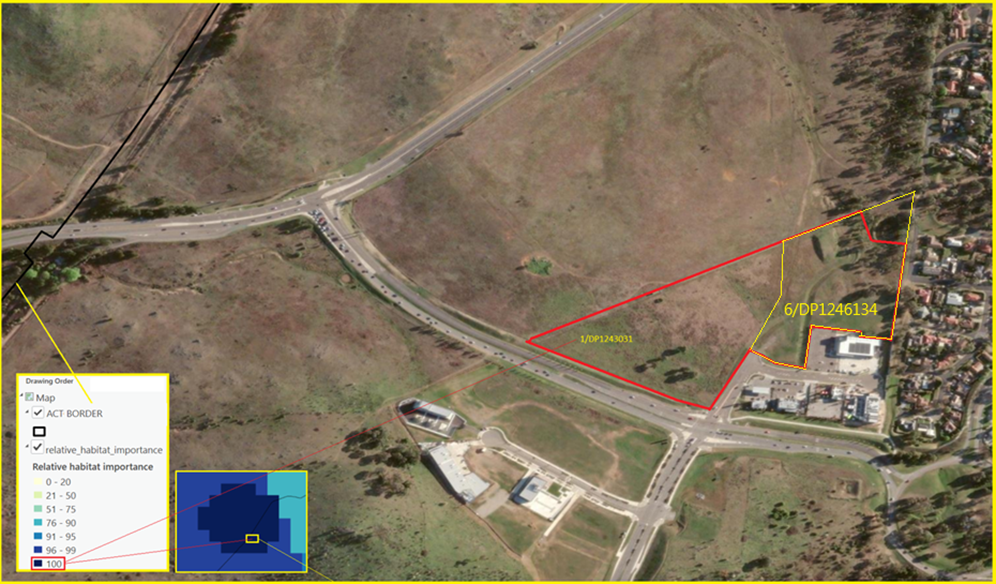
Figure 2: Location of Lot 6 in relation to the ACT border and habitat of the utmost importance for Canberra Dragon (Figure 3)
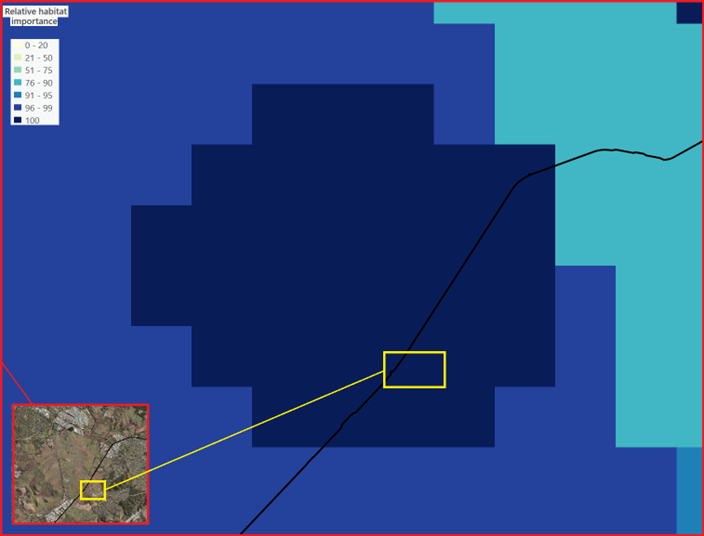
Figure 3: Jerrabomberra Valley, and Lot 6 within it, are habitat of the utmost importance for Canberra Dragon[3]
References
[1] https://epbcpublicportal.environment.gov.au/_entity/sharepointdocumentlocation/939bc651-17b2-ec11-983f-002248182c59/2ab10dab-d681-4911-b881-cc99413f07b6?file=2020-8801-Approval-Decision.pdf
[2] Department of Climate Change, Energy, the Environment and Water (DCCEEW) (30 July 2026) Prioritising habitat for Australian biodiversity, www.dcceew.gov.au/about/news/prioritising-habitat-australian-biodiversity
[3] DCCEEW (online) Relative Habitat Importance for Threatened and Migratory Species, https://fed.dcceew.gov.au/datasets/0732222780f84f9387975f26e0bc5af6/about, data downloaded 31 July 2026